
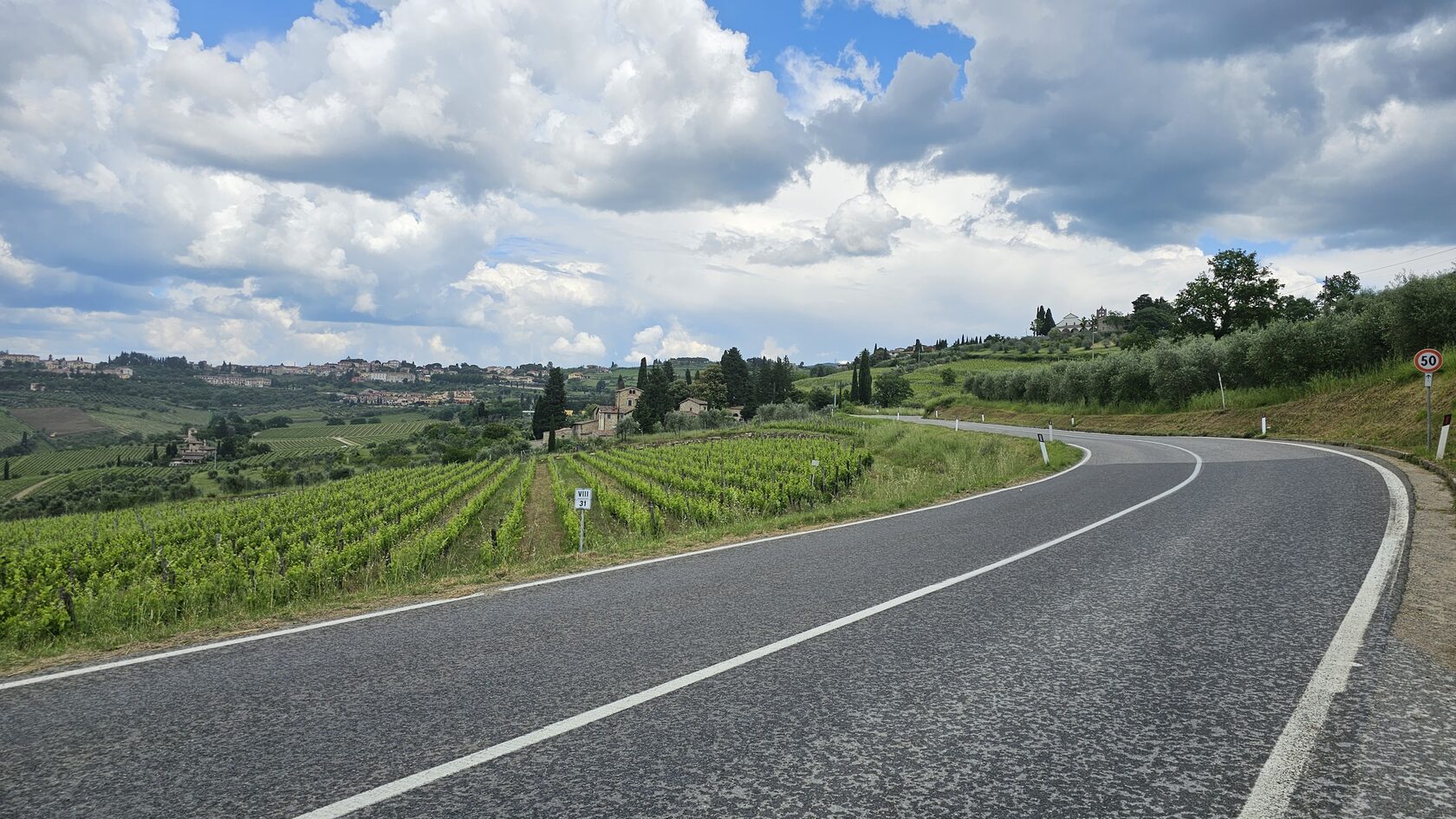
There is a road somewhere in the world right now that curves gently through green hills, smooth and well-marked, built to last and maintained with care. It moves people and goods efficiently, safely, and without drama. It is the kind of road that a country builds when it takes infrastructure seriously.
Then there is the Nigerian road.
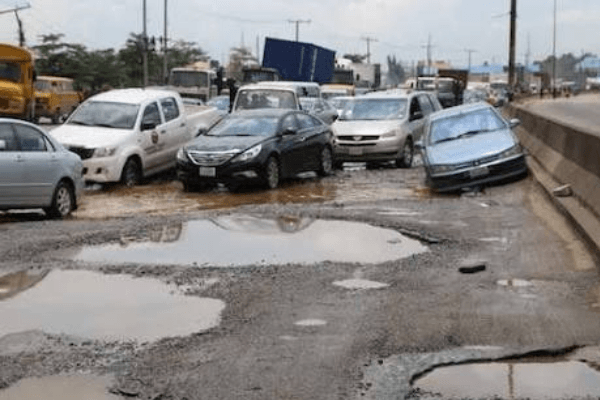
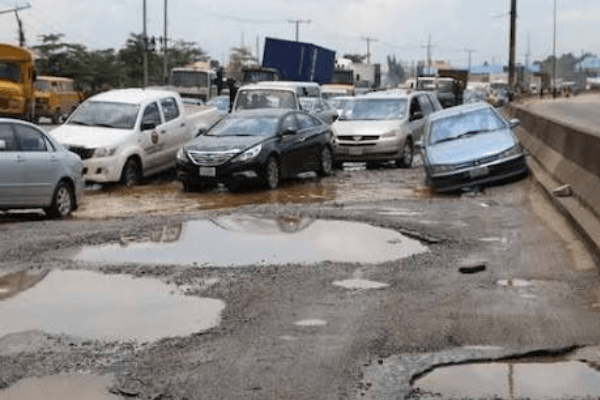
Craters wide enough to swallow a tyre. Flooding that turns expressways into rivers after an hour of rain. Bridges that groan under the weight of trucks they were never designed to carry. Potholes that appear, get patched badly, and reopen within weeks. Roads that have been "under construction" for so many years that the contractors' signage has rusted into the landscape.
If you have driven in Nigeria, you know this is not an exaggeration. It is daily life.
The Scale of Nigeria's Road Problem
Nigeria has one of the largest road networks in Africa — approximately 200,000 kilometres of roads spanning federal, state, and local government classifications. On paper, that is an impressive number. The reality on the ground tells a different story.
A significant portion of Nigeria's road network is in a state of disrepair that ranges from poor to outright dangerous. Federal highways that connect major commercial cities are riddled with potholes. State roads in urban centres are frequently flooded, eroded, or completely collapsed in sections. Rural roads — the arteries that connect farming communities to markets — are often unpaved and impassable during rainy season, cutting off food supply chains and isolating millions of Nigerians for months at a time.
The consequences are not just inconvenience. They are economic and humanitarian.
Vehicle maintenance costs in Nigeria are significantly higher than in peer economies, because cars and trucks are constantly absorbing punishment from bad roads. Accidents caused by potholes, road collapse, and poor road markings kill thousands of Nigerians every year. Goods spoil in transit because journey times are three or four times longer than they should be. Fuel is burned in traffic jams created not by volume alone but by roads that bottleneck and break down at every turn.
The World Bank and various research bodies have estimated that Nigeria loses hundreds of billions of naira annually to the economic drag of poor road infrastructure. It is one of the most significant — and most preventable — costs in the Nigerian economy.
How Did It Get This Bad?
The honest answer is: gradually, then all at once.
Nigeria's road infrastructure problems did not emerge overnight. They are the product of decades of underinvestment, poor procurement practices, weak contract enforcement, corruption in the award and execution of road contracts, and a maintenance culture that has never properly taken root.
Roads in Nigeria are frequently built to substandard specifications — sometimes with inferior materials, sometimes with designs that do not account for Nigerian rainfall patterns and traffic loads. When such roads fail within a few years of construction, the response is often a patch job that delays the problem by months rather than solving it. Proper maintenance — the kind that identifies early distress signals and addresses them before they become craters — is rarely funded or prioritised.
The federal and state governments have announced road rehabilitation programmes repeatedly over the decades. Some have delivered results in specific corridors. Most have stalled due to funding gaps, contractor abandonment, or political transitions that reset priorities. Meanwhile, the roads continue to deteriorate under the weight of a growing population and an expanding freight economy.
Nigeria's population has more than doubled since many of its major road arteries were built. The roads were not designed for this volume. They have never been comprehensively upgraded. And the maintenance backlog has compounded year after year into a deficit that now requires serious, sustained, professional intervention to address.
The Cost of Doing Nothing
It is worth pausing on what inaction actually costs — because it is easy to become numb to a problem that has existed for so long.
Every truck that takes eight hours to cover a 200-kilometre journey because of bad roads is carrying goods that cost more to transport than they should. That cost is passed to consumers. Every family that loses a breadwinner to a road accident loses not just a person but an economic unit. Every farmer whose produce rots on an impassable rural road is a small business destroyed by infrastructure failure.
Bad roads are not just an inconvenience. They are a tax on every Nigerian — paid not to government, but to inefficiency, to vehicle repair shops, to fuel stations, to the hospitals that treat accident victims, and to the grief of families who lose people on roads that should have been fixed years ago.
Nigeria cannot achieve its economic potential with this infrastructure deficit. Period.
What EasyKrest Brings to the Table
EasyKrest Nigeria Limited is an EPCC company — Engineering, Procurement, Construction, and Commissioning. Civil engineering is one of the core pillars of what EasyKrest does, and road construction and rehabilitation sits squarely within that capability.
This is not a company that stumbled into civil infrastructure. EasyKrest brings genuine engineering competence, project management discipline, and a commitment to quality that treats every kilometre of road as a deliverable that real people will depend on — not just a contract to be executed and invoiced.
Here is what EasyKrest's approach to road construction and rehabilitation looks like in practice:
Proper Site Investigation and Design — Before a single tonne of material is laid, EasyKrest conducts proper geotechnical investigation and design work. Nigerian roads fail prematurely in large part because they are built on inadequate designs that do not account for local soil conditions, drainage patterns, and traffic loads. Good roads start with good engineering. EasyKrest does not skip that step.
Quality Materials and Procurement — The quality of road construction is only as good as the materials that go into it. EasyKrest's procurement standards, developed through years of working on oil and gas and civil projects, ensure that the right materials — properly specified and properly sourced — go into every project. Substandard bitumen, incorrect aggregate gradations, and poorly mixed concrete are how roads fail early. EasyKrest's procurement discipline prevents that.
Drainage and Stormwater Management — One of the primary causes of road failure in Nigeria is poor drainage. When rainwater has nowhere to go, it saturates road bases, erodes foundations, and opens potholes from underneath. EasyKrest designs and constructs drainage systems that are integral to road projects — not afterthoughts. Roads that drain properly last significantly longer.
Pavement Engineering and Rehabilitation — For existing roads in poor condition, EasyKrest's civil engineering team can assess the extent of deterioration, recommend the appropriate rehabilitation strategy — from overlay and patching to full reconstruction — and execute that strategy to professional standards. The goal is not to patch a road for six months. It is to restore a road for fifteen years.
Project Management and Delivery — EasyKrest brings structured project management to civil works. Schedules are set, milestones are tracked, quality is inspected at every stage, and clients receive regular progress reporting. The abandoned-contractor problem that has plagued Nigerian road projects is the product of poor contract management. EasyKrest operates differently.
Rural Roads: The Forgotten Infrastructure
Much of the conversation about Nigeria's road crisis focuses on urban expressways and federal highways. But some of the most damaging road failures happen quietly, in rural communities, on the unpaved laterite tracks that connect villages to markets, health centres, and schools.
When a rural road becomes impassable in rainy season, the entire community is effectively cut off. Children cannot get to school. Sick people cannot get to clinics. Farmers cannot get produce to market. The poverty that results from this isolation is not an accident of geography — it is the predictable outcome of infrastructure neglect.
EasyKrest's civil engineering capabilities extend to rural road construction and rehabilitation. Properly designed and constructed rural roads — with appropriate drainage, surface treatment, and structural depth for the traffic they will carry — can transform the economic prospects of communities that have been left behind for generations.
The Government Cannot Do It Alone
Nigeria's road infrastructure challenge is too large and too urgent for government alone to solve. The scale of the deficit, the funding requirements, and the technical expertise required to execute road projects professionally exceed what any single tier of government can deliver through its own resources and systems.
What is needed is a strong private sector engineering industry — companies that can be contracted, held accountable, and trusted to deliver quality work on schedule and to specification. Companies that have the equipment, the technical teams, the project management systems, and the professional standards to be genuine partners in national infrastructure development.
EasyKrest Nigeria Limited is building itself to be that company. Every project delivered to standard, every client relationship built on trust, and every kilometre of road properly constructed is a contribution to the infrastructure ecosystem Nigeria needs.
"We believe that every Nigerian deserves a road that is safe, functional, and built to last. That is not an aspirational statement — it is an engineering obligation. And it is one we take seriously on every project we undertake."
— EasyKrest Nigeria Limited, Civil Engineering Division
A Better Road Is Possible
The smooth road in the photograph is not a fantasy. It is simply the product of proper engineering, proper materials, proper drainage, and proper maintenance — consistently applied over time. Nigeria has the land, the traffic, the economic need, and increasingly the technical expertise to build roads like that.
What has been missing is the combination of political will, funding discipline, and engineering professionalism required to deliver them at scale. That combination is not yet perfect in Nigeria. But the engineering professionalism piece — EasyKrest is here to provide that.
If you are a government agency, a development finance institution, an oil and gas operator, or a private estate developer with road construction or rehabilitation requirements, EasyKrest Nigeria Limited is ready to engage. Bring us the project. We will bring you the engineering.
0 Comments
Be the first to leave a comment below.
Leave a Comment